What Makes Goblins So Engaging?

Written by Sawyer Altman, CEO
Instructional technology has an engagement problem. There is a known trope in research world called, "The 5% Problem", wherein edtech companies tout an impressive academic outcome from a recent study of theirs, but on further examination, the study shows that the headline only applies to the top 5% of students, and in fact 95% of kids never reached the threshold of usage needed to be considered "treatment". In other words, they threw out 95% of the data — the vast majority of kids, especially the most vulnerable ones, the ones who weigh on attendance, graduation rates, state test proficiency scores, and which districts spend so much money and time trying to help.
Indeed, the kids who are best served by edtech historically do not need edtech at all. They generally come from highly engaged families (family income is the single best predictor of academic achievement), and would have done fine either way, whether finding a textbook or a YouTube video.
When we started Goblins, we set out to buck this trend. We sensed there were new technologies emerging that could enable far more engaging learning experiences than ever before, and we are proud to say that we are succeeding in reaching far more students than the norm, including the students who are hardest to reach.
In a forthcoming ESSA Tier 2 study on 6,000 Goblins users funded by Accelerate and performed by the University of Maryland, Goblins got 12x the number of students to the same level of growth that Khan Academy considered impressive in their 2022 study that made "The 5% Problem" famous. Khan got 4.7% of students to that level of growth (0.26 standard deviations, a bit larger an effect than the difference between a mediocre teacher and a life-changing teacher). Goblins got 55% of students there. Just picture your best teacher, and your average teacher; now imagine half of your teachers suddenly rose to the level of your best — that is what Goblins is doing.
- Khan Academy students reaching 0.26 standard deviations
- 4.7%
- Goblins students reaching 0.26 standard deviations
- 55.0%
- Khan Academy students reaching 0.50 standard deviations
- 0%
- Goblins students reaching 0.50 standard deviations
- 26.6%
People ask us all the time, ok but how are you doing this? What specifically is it about Goblins that gets these kids to buy in?
Good pedagogy is engaging pedagogy.
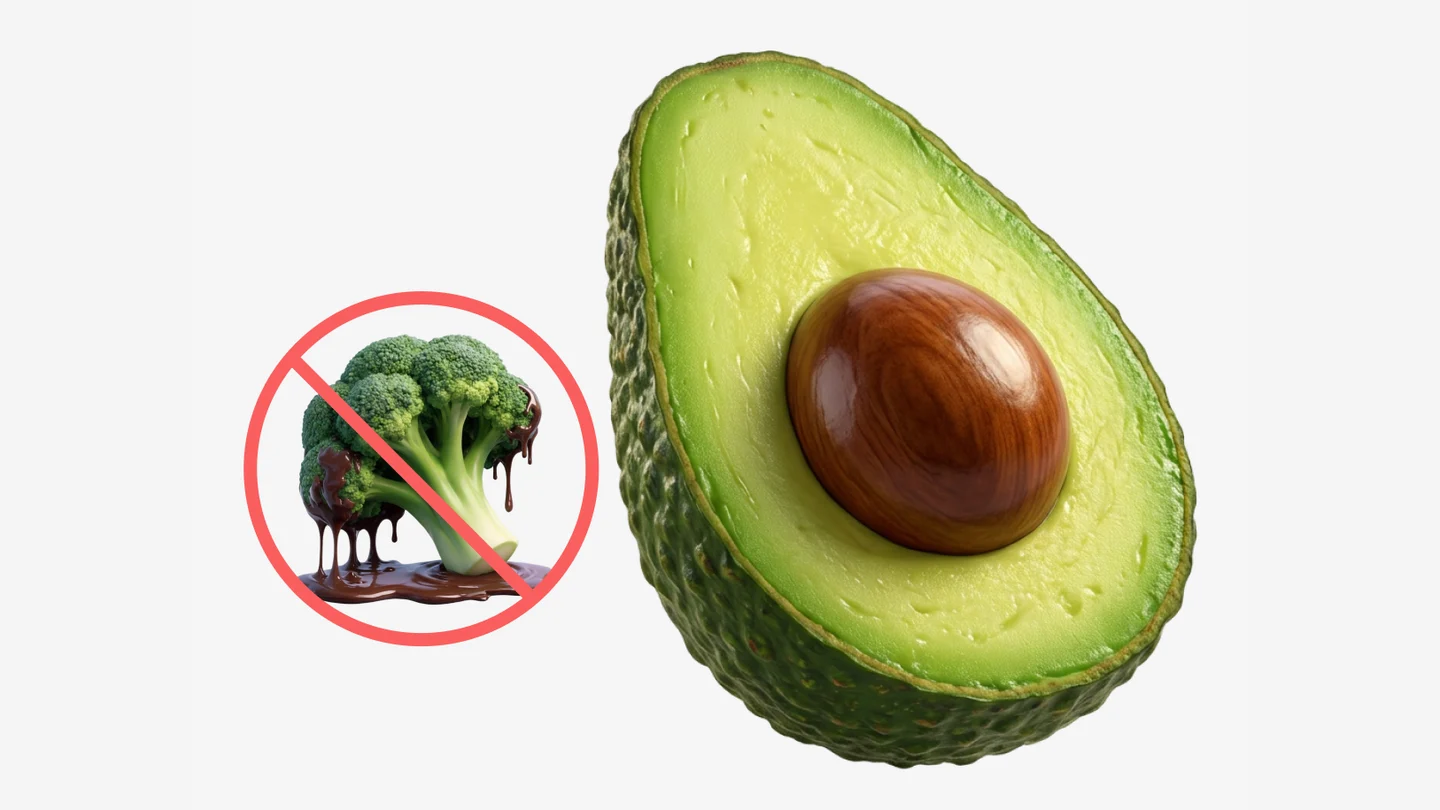
What students are being served via the previous generation of "personalized learning" technologies has been "chocolate-covered broccoli". Those platforms center on algorithms that select problems for students to work on, shifting up and down based on whether they got a problem right or wrong, but they actually do not know anything about the why behind a student's confusion, and they definitely do not teach anything. In the best case, they'll show students a video of a generic problem in the topic, and hope the student knows how to apply the learning.
This is boring, sometimes frustrating, and definitely ineffective (read our complaint about adaptive learning in detail), so kids didn't buy in. So what developers did next was they drizzled gamification on top, rewarding students with points and unlockable mustaches. The issue here is they may be fun for a bit, but they get old, and they make kids feel pandered to. (A rule we follow here: respect the kids! They can smell disingenuousness, when something that isn't fun is dressed up to look fun.)
At Goblins, we are making the learning itself more powerful, which means we have no need for the sugary veneer of gamification on broccoli. Instead, we're building an avocado: something appealing (it’s $2.50 a pop at my local bodega in Brooklyn), but also healthy. We begin by fixing a student's mindset.
Lack of engagement is a mindset problem.
We all have a deep-seated desire to be competent in a domain that others consider important. Kids, too, generally want to realize the ideal of the “good student”.
But math is cumulative, and kids get left behind. A student getting C's year after year will often arrive at Algebra I with too many gaps to succeed. Even missing class or dozing off on a given day can prompt a slide that is difficult to undo. Couple that with the fact that there is a widespread belief in our culture that struggling in math means you’re “bad at math”. It’s seen as a personal failure, not a pedagogical one, leading kids to embrace a negative view of math, viewing class as a constant insult to their confidence. And in order to satisfy the deep-seated need to maintain their self-image as competent people, kids rationally start seeking competence elsewhere. They find it in their dance troupe, their basketball team, their friends down the street who value them for who they are.
Goblins succeeds in engaging students because it reverses what may be years of this negative reinforcement.
First, Goblins proves to kids that it's worth trying.
When I was teaching, I gave my students early versions of ChatGPT and other chatbots, and it was immediately clear they wouldn't do the job; students need a way to show their authentic process with little friction, via spoken math and actual handwriting. That way an AI would be able to do what a great teacher does — be proactive. After all, a great teacher doesn’t wait for a student to ask a question, often because a confused student doesn’t have a sufficiently developed mental math model, or metacognitive skills, to even know what question to ask. A great teacher works backwards from a student’s work and reasoning, infers misconceptions or gaps, and then springs into action to help fix their misconceptions.
Goblins does exactly that. It makes it super easy for students to show their thinking. We let kids draw and speak, and we’re very good at inferring their intentions, even in a busy classroom and with nearly unintelliglbe handwriting (I can hardly read a lot of what Goblins successfully reads as a human!)
Receiving responses via audio, with its pointed socratic-style questions, solicits attention and a response in a deeply primal way (reinforcing this further, teachers can also configure responses to be delivered by real-time Pixar-like avatars, optionally cloned from the teacher’s voice and image!) And by acknowledging the student's work and struggle, kids quickly feel like “this gets me”. This is a big relief to struggling students. "How did it know what was going on in my head?" It doesn't just know if the student got something right or wrong, it identifies the precise step, or flags a flaw in their logic. It gets them thinking, "maybe if I show a little more thinking, it will help me."
Goblins then proves to them their own competence, reinforcing that it’s worth buying in.
Also like a great teacher, Goblins refuses to do the work for them. Learning requires thinking and thinking requires cognitive effort. And further, the student needs to struggle a bit so that they can have the gratification of having done it themselves, a feeling that is, frankly, addictive.
In fact, a handful of kids who use Goblins on day 1 will moan to their teachers, "I don't like it, can we go back to that other tool?" And when teachers inquire, it’s invariably because the students are not used to anyone asking them to show and justify their thinking before. It hurts, it literally hurts, to expend cognitive effort. This is our proof that Goblins is working, especially because those students end up more bought in than anyone!
This is why we get so many students saying things like:
"I used to not like math, but with Goblins, it helped me understand, and now math is my favorite subject."
"I did not like Algebra at all, so when I started using Goblins I started understanding it more, and then I started liking it."
"It just became fun like if you understand it, it's just fun"
Goblins takes the best from battle-tested pedagogical research, reinforcing these loops.
For every minute spent in Goblins, we are obsessed with further maximizing the growth students experience. For example, we are diligent about keeping them in the zone of productive struggle, constraining working memory, and giving additional support using mini lessons with analogous problems or sequences that try to isolate the most atomized version of the concept or sub-concept, so that we can coach without actually doing the work for the student.
The rarest overlap: engaging and effective.
Goblins therefore has the rare ability to engage and be effective learning at the same time. Goblins can increase engagement and buy-in across your classes, making teachers' lives easier, and helping tier 1 instruction land, and it can even reach the students who seem unreachable. Whatever your focus area is for improvement, we'd love to help.