What Makes Goblins' Pedagogy So Effective?

Written by Sawyer Altman, CEO
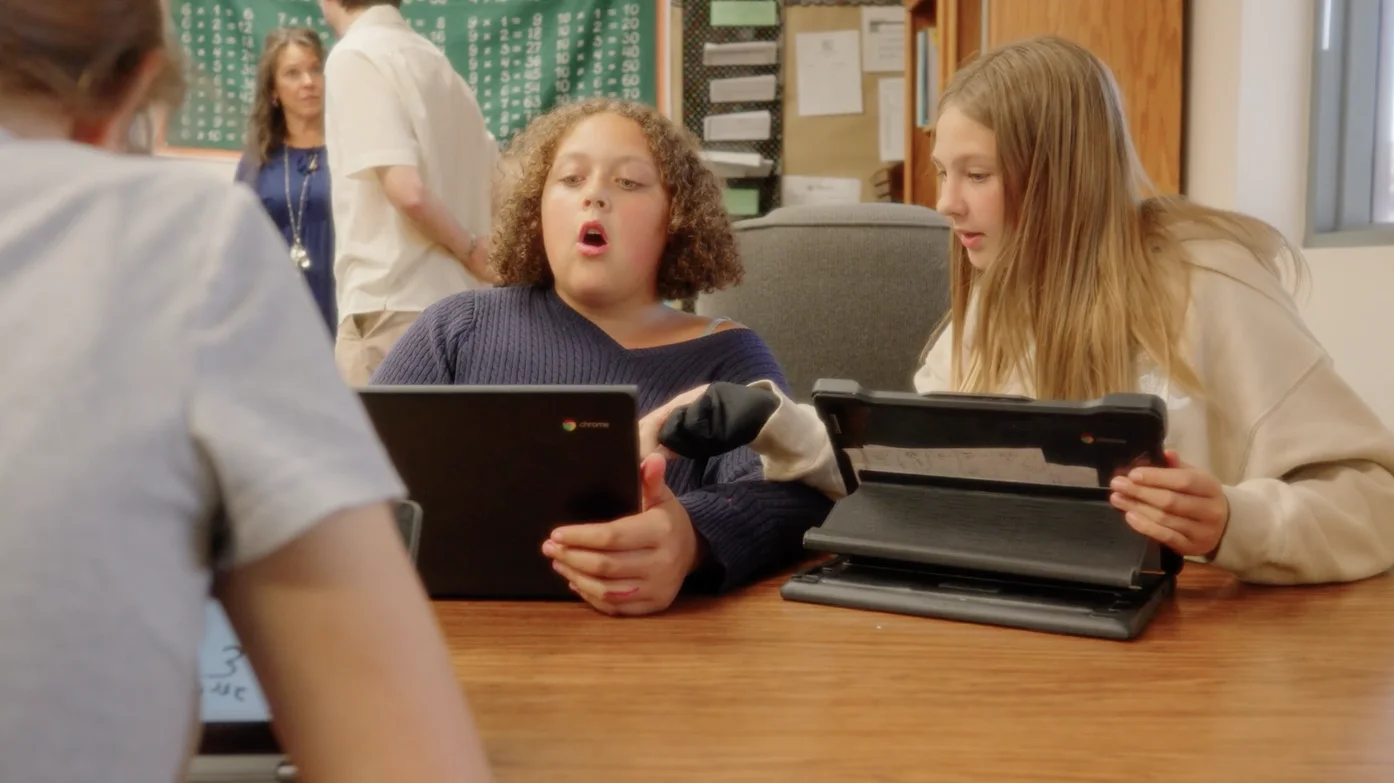
When I was teaching precalc at a Title I school in New York City, I had 30 kids in my class, and their heads were all over the place. Some were still working on elementary skills like adding fractions or single-digit multiplication. I loved being able to sit down 1-on-1 with them and observe their authentic process — the questions they'd ask that revealed subtle misconceptions, where they'd trip up on arithmetic errors versus the concept at hand — and then fill the gaps in their foundations.
There was just never enough time.
Goblins is designed to scale up these interactions, helping educators realize high-quality, socratic-style pedagogy with every student, every day.
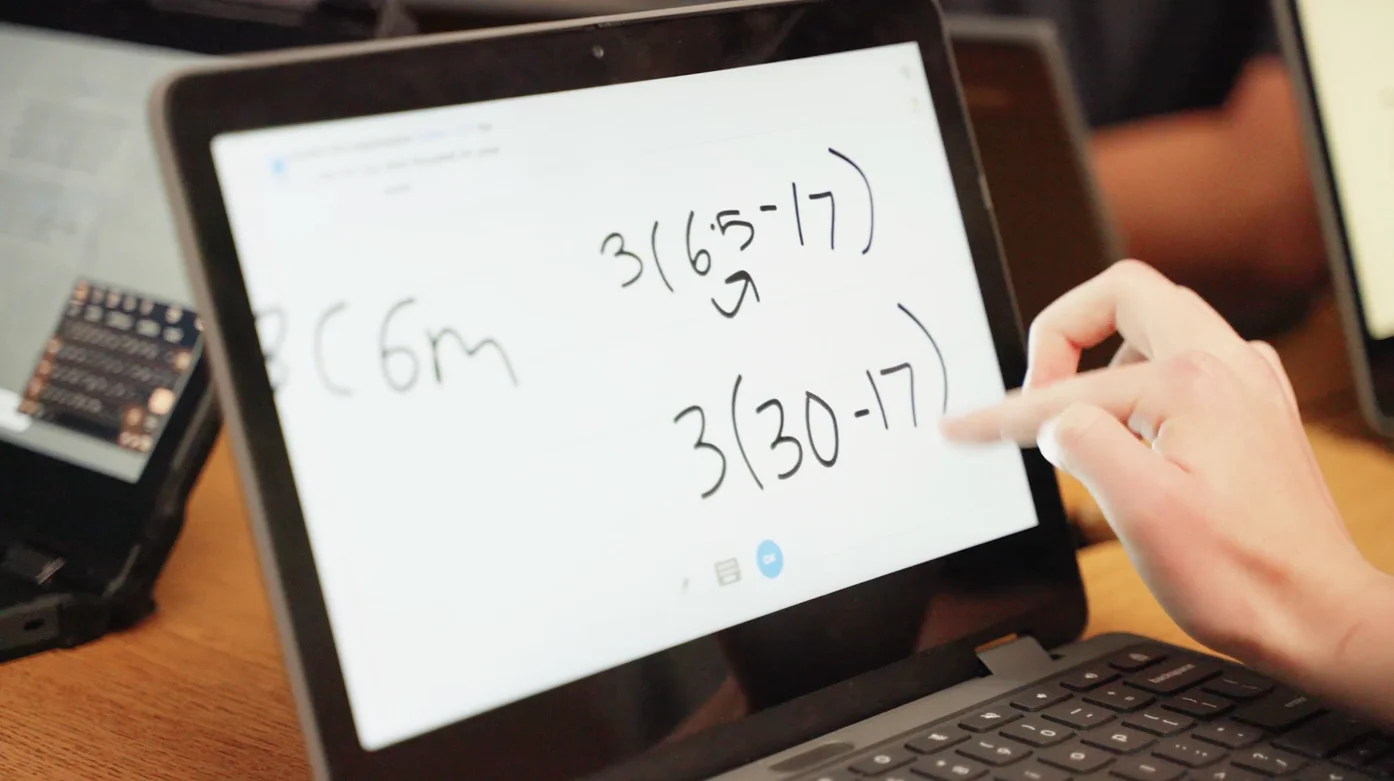
Goblins lets you take the same content from the same scope and sequence you're already using (we support the big publishers, or feel free to upload your own and we'll Goblinize it), and increase its dynamic range. Just like when I'd sit with my kids, with Goblins, kids can show their authentic process by speaking and drawing naturally in an open-ended conversation, getting 1-on-1 help focused on their conceptual understanding.
District admins also love how Goblins supports teacher content knowledge and lesson internalization. Goblins helps them model excellent pedagogy for teachers who want to embrace evidence-based techniques, but who may be less familiar, creating a feedback loop for them that is more regular and more specific to their context than an expensive set of PDs.
As a result, Goblins achieves unusual results. In a recent ESSA Tier 2 study on 6,000 Goblins users funded by Accelerate, the University of Maryland concluded that doing just 2 problems a week (about 5 minutes) in Goblins is as powerful as the difference between a mediocre teacher and the best teacher in your district (about 0.24 standard deviations of growth). Students at the higher reaches — for example, at 10 problems per week — meanwhile grew almost two school years in a single school year. For reference, studies by the previous generation of math learning platforms like IXL and Magma Math consistently report that their tools' effects are "not significantly associated" with changes in scores (although their marketing websites seem to have no problem contradicting the studies, which they themselves commissioned 🙃)
How are we doing this? The short answer is we're math people who are obsessed with curing students of the fiction that they're "bad at math", and we know that building a generic chatbot with no pedagogical anchors won't do the job. This is why we adhere to a set of key design principles:
#1 Goblins puts students in the driver's seat.
The bane of a teacher's existence is a student who gets stuck and immediately raises their hand to ask for help. Even worse, students seldom know how to ask good questions.
Goblins helps students learn to do precisely that, and gives them tools to get help without waiting on the teacher. To be clear, Goblins will never give them the answer; rather, it will challenge their thinking with socratic questioning, even flagging specific areas in their work, and prompting them to reflect. If a student is no longer productively struggling, or giving low effort ("IDK, IDK, IDK"), it will try to pull out what specifically is tripping them up via its questioning, and it will create analogous problems that take them by the hand and fill in their foundation. It'll then encourage them to apply what they just learned.
This is consistent with our belief that learning requires thinking, and thinking isn't free (see mathemagenic activities, Rothkopf 1970). Students need to expend cognitive resources — firing neurons in their brain is what rewrites the connections — to grow. So when Goblins encounters issues, it lets students drive; it just pumps the brakes. (More below on how we balance that with cognitive load).
This not only frees up the teacher so that they're no longer dashing around the classroom to unblock students (teachers describe Goblins as "being in 30 places at once"), but it gives students a key future-ready skill in the AI age: how to use resources to take ownership over their learning. And most importantly, it proves to students that they can overcome their struggle, which is key to what makes Goblins so motivating for kids.
#2 Goblins gives rapid feedback.
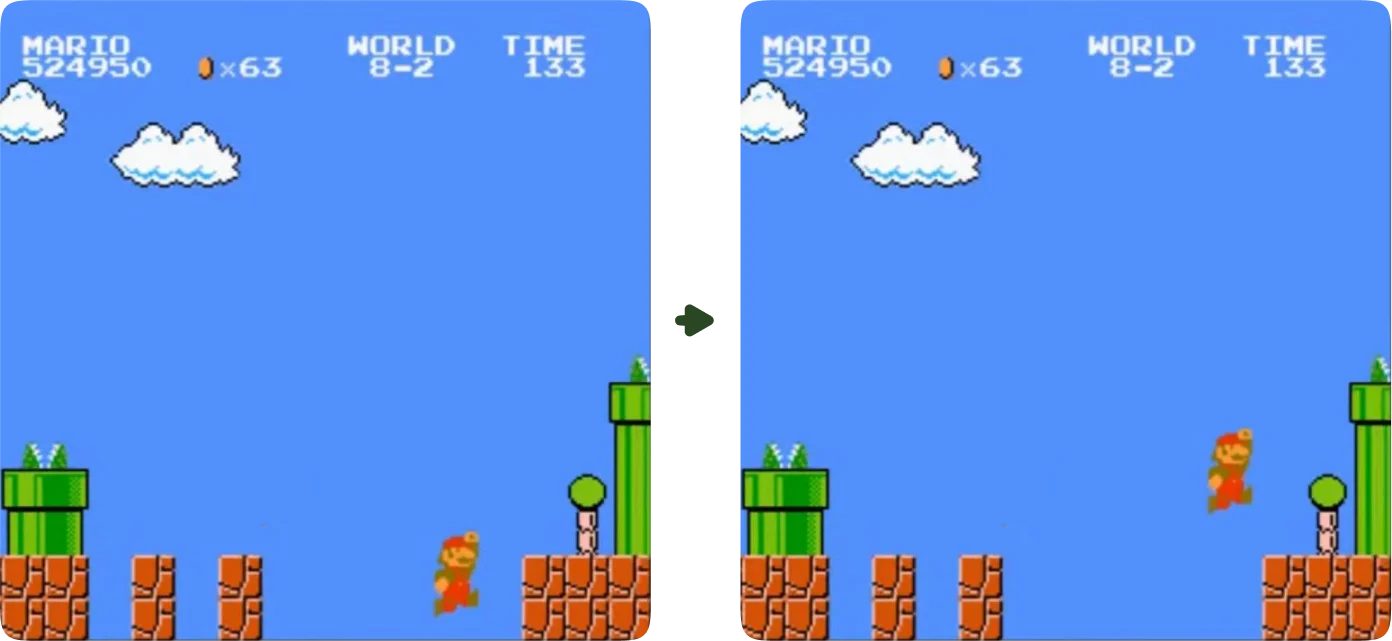
There is an endless trove of academic research that supports how tight feedback loops are essential to learning (see the power of feedback, Hattie & Timperley 2007). Basic experience, too, confirms it — if you've ever put your hand on a stove, the instant pain teaches you quickly; or if you've ever failed on a level in Super Mario, you remember how next time, you need to jump earlier. These loops of attempts, failures, and retries are essential to how we learn.
Unfortunately, in a normal classroom, many students are too shy to raise their hands for clarification, and even on assignments and assessments, students will get feedback on their work 3-5 days later on a good week, often after the misconception has calcified, the specific context was lost, or the learning was outright forgotten.
Goblins gives students far more at-bats with feedback. A single conversation in Goblins could result in 20 different challenges or corrections that force students to justify, reconsider, or explain something at a deeper level. Though Goblins often substitutes independent practice in class, these feedback loops make a typical Goblins problem unlike any problem done on paper.
The kind of feedback Goblins offers matters, too. In a typical "adaptive learning" tool, students put in a response and discover that they are either "right" or "wrong". If they're lucky, it shows them a video of a problem pertaining to the topic, and the student is left to interpolate how that problem applies to the one they're trying to solve (read our complaint about adaptive learning in detail).
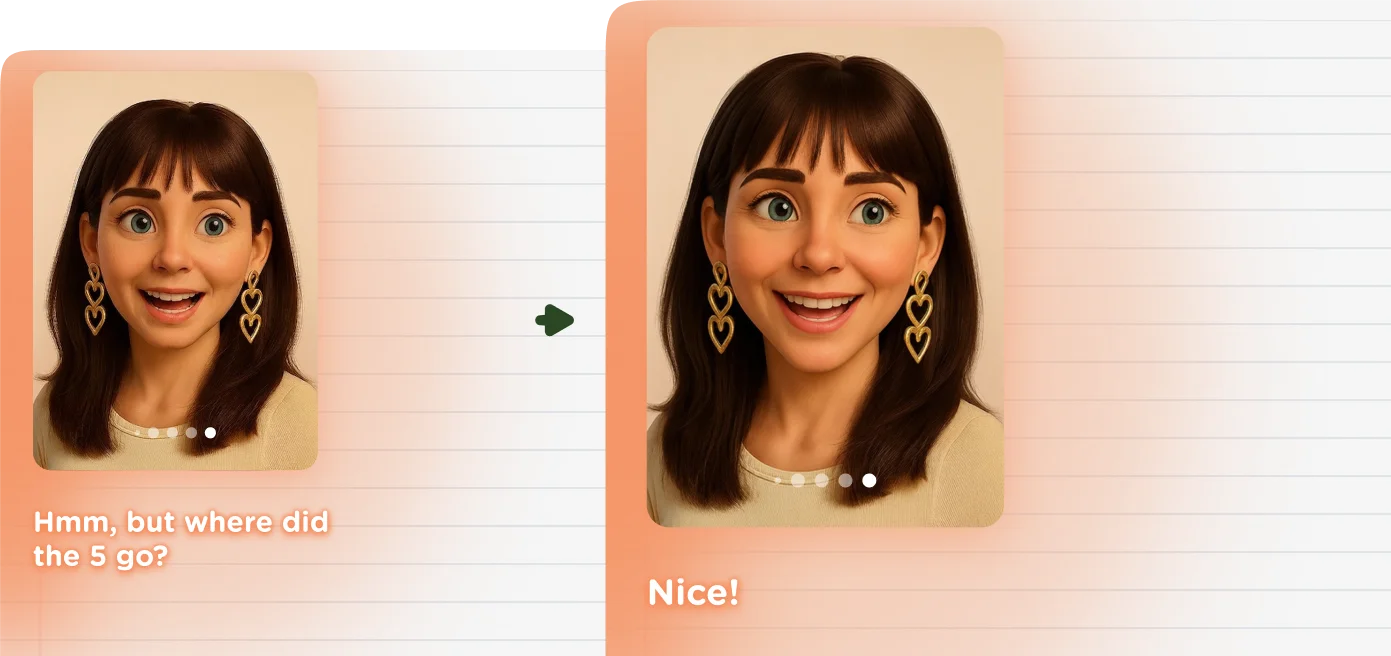
Instead, Goblins gives feedback on the actual why behind the student's confusion. It flags the actual error or misconception at the moment of struggle, giving the student the scaffolding they need to actually learn (see scaffolding, Wood, Bruner & Ross 1976).
#3 Goblins exposes students to the right level of productive struggle.
When I taught, I quickly learned that a confused student doesn't know what they don't know. For example, I had one student ask “why” repeatedly to ChatGPT, which ended up plumbing deep into number theory, providing an explanation that was unintelligible even to me. This is a key issue with the AI chatbot: If you spend too much time letting students flounder unproductively or letting them drown in walls of textual jargon, you waste their working memory, a precious cognitive resource (see cognitive load theory, Sweller 1988). When they run out of it, they get frustrated, and conclude they must be "bad at math".
This is why great teachers are proactive. They don't wait for a student to ask "why"; instead they try to minimize the cognitive load and infer what the student is struggling with, and then target that. This lets them keep students in a zone of productive struggle (see the zone of proximal development, Vygotsky 1987).
Similarly, Goblins is constantly observing students' work, and then intervening with care. It's asking itself, "When should I intervene? How much should I intervene?", carefully balancing the need to provide scaffolding while preserving student agency. Whenever possible, it will isolate a specific misconception (see atomization, Boulton & Barton 2024), constraining the complexity a student needs to handle at any given time. Goblins will even circle a specific moment of confusion to direct their attention at one thing at a time. And it will always deliver short, punchy questions.
Goblins will also go deeper. When a specific misconception presents itself, Goblins generates animated mini-lessons on-the-fly geared to that specific moment of struggle, providing more intensive help when needed. This lets us thread the needle between discovery and direct instruction (see the case against minimal guidance, Kirschner, Sweller & Clark 2006), ensuring they have enough support to get to the win on their own.
#4 Goblins focuses on conceptual foundation and math intuition, not rote memorization.
We believe that rote ability is a gateway to a broader insight. You need the skills to get to the higher-level, more interesting stuff. But the more interesting stuff is always the point.
Whenever possible, Goblins focuses on intuition-building. Our mini-lessons make ample use of visualizations (see dual coding, Clark & Paivio 1991) and interactives that use rich animations built on proprietary technology. They also make use of analogies that ground the math in real-world scenarios. (In fact, Goblins learns students' interests over time, coloring those analogies in things like soccer or dance examples). And once they've assimilated a given "atom" of learning (see atomization), we show permutations of it with light tweaks, gradually helping them reinforce the concept's full breadth so that they can generalize its application to all cases.
#5 Goblins equips the teacher to be more effective with their own pedagogy.
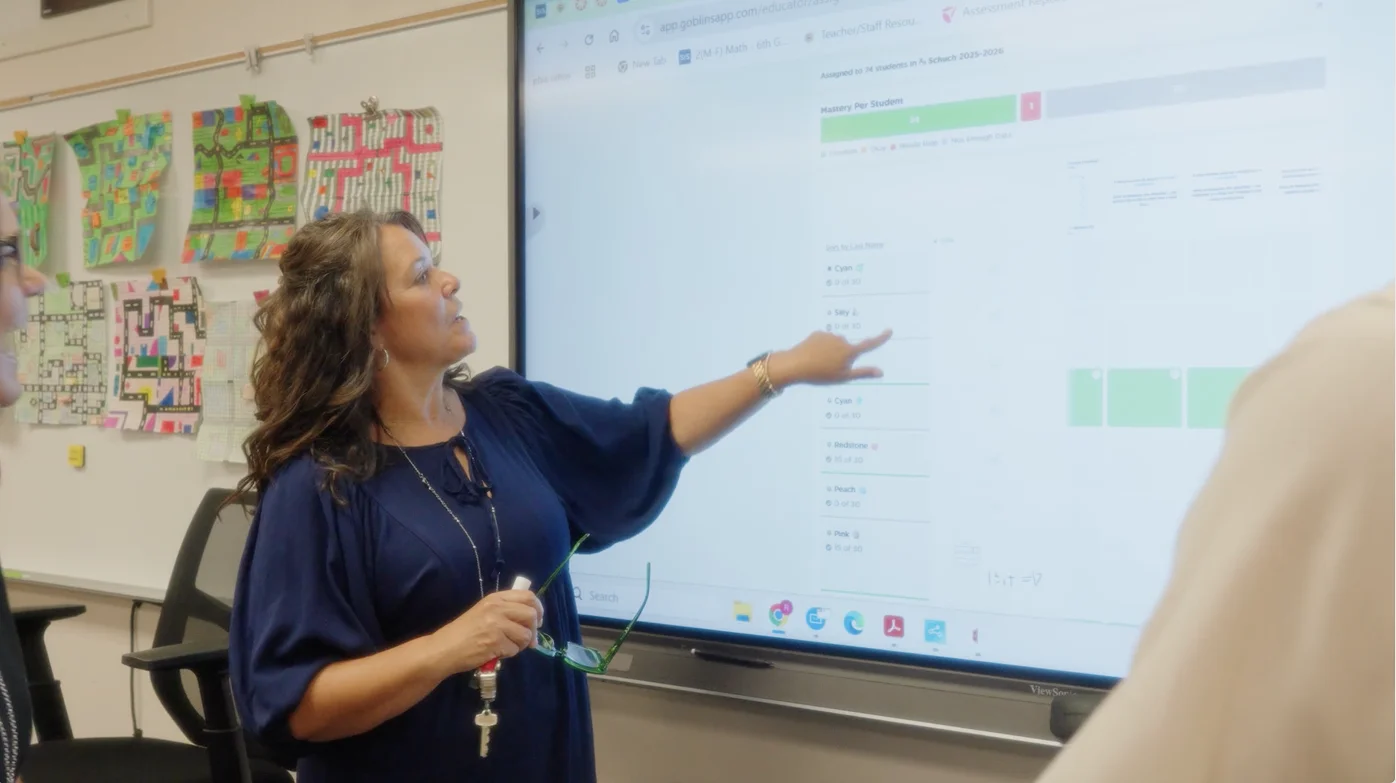
When students use Goblins, the classroom benefits from many invisible dividends. Not only are kids growing and engaged when they work with Goblins, but more gaps being filled means tier 1 instruction goes better, with more students able to follow along and access the floor. Better math mindsets also mean better overall buy-in, making kids more likely to engage.
Goblins' analytics are then the cherry on top, equipping teachers to be more effective with their own instruction. Teachers describe the analytics as permitting a “paradigm shift” in their teaching: The real-time sense for where kids are struggling lets them use their time in class with more leverage, focusing on specific small groups or students needing extra support. Then after class, Goblins helps teachers digest what’s going on across the class — who struggled most with what, which supports their internalization of the lesson, what pitfalls students ran into, and what still needs to be reinforced. All of this is informed by whole student conversations, artifacts that contain far more information on a student's ability than a final submission on a given problem. And if they like, they can drill further into conversation replays and transcripts to build deeper context. It also helps them take quick action via suggestions for small groups or ideal content to assign. Teachers get a win-win: they're saving time, while knowing far more about students than they could if they were grading.
We exist to blow students' minds.
Goblins has had millions of conversations with students across districts big and small, rural and urban, private and public. Internally, we track metrics on the quality of these conversations, built on the principles described above — e.g. How well did we preserve student agency? How efficiently did we infer the student's misconception? How efficiently did we correct it? These scores not only correlate strongly to the state-level achievement scores we see in our studies, but they make possible the kind of mind-blowing learning experiences that inspire kids to love to learn, and that's our ultimate measure of success.