5th GradeVolumeabout 2 minCCSS 5.MD.C.3.aA cube with side length 1 unit, called a "unit cube," is said to have "one cubic unit" of volume, and can be used to measure volume.CCSS 5.MD.C.3.bA solid figure which can be packed without gaps or overlaps using n unit cubes is said to have a volume of n cubic units.CCSS 5.MD.C.4Measure volumes by counting unit cubes, using cubic cm, cubic in, cubic ft, and improvised units.CCSS 5.MD.C.5.aFind the volume of a right rectangular prism with whole-number side lengths by packing it with unit cubes, and show that the volume is the same as would be found by multiplying the edge lengths, equivalently by multiplying the height by the area of the base. Represent threefold whole-number products as volumes, e.g., to represent the associative property of multiplication.+0
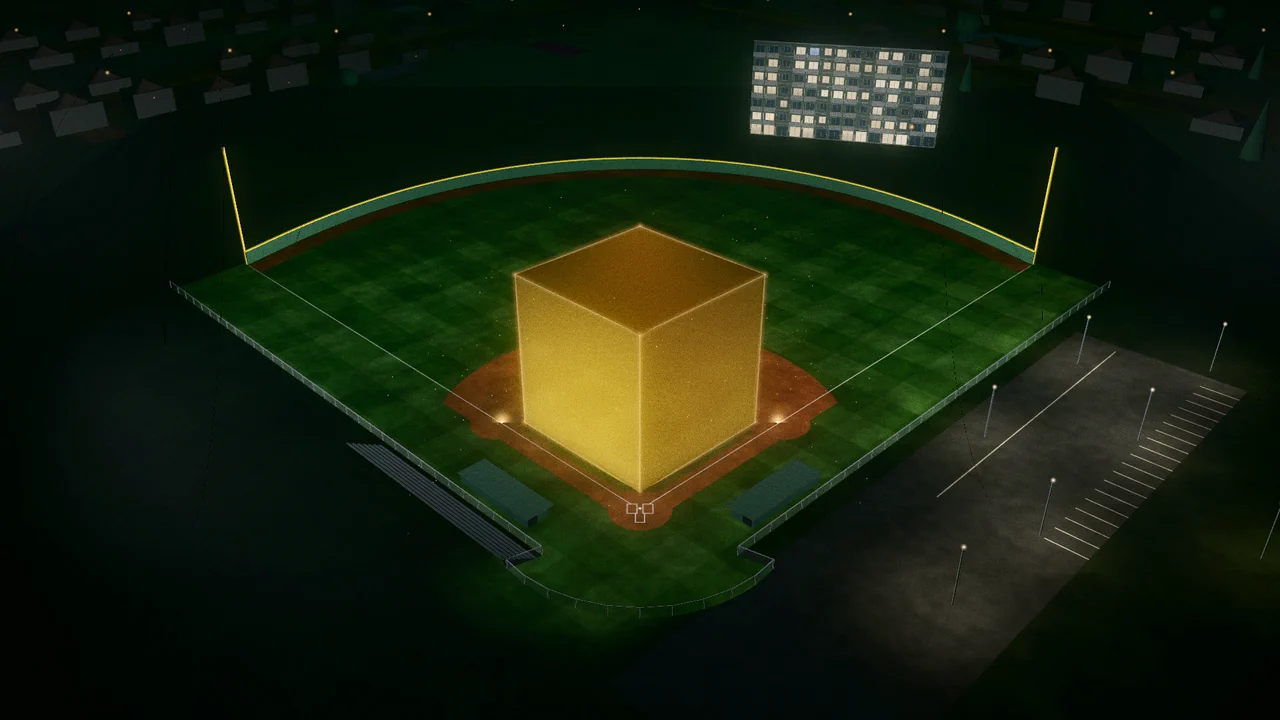
Melt all the gold ever mined into one cube. Then fill it with blocks, layer on layer.
Lesson Plan
Explore the volume of rectangular prisms, from counting unit cubes to V = l × w × h.
Question: Ask what students spot and what they are curious about. Have each student guess and say why.
Big idea: Pause. Ask a student to say the idea in their own words.
Question: Read “How many blocks fill it?” aloud. Have partners explain their guesses to each other.
Big idea: Pause. Have partners explain the idea to each other.
Real-world application: Ask: Where else have you seen this?
Your turn: Have students try their own. Ask them to predict before they test. Ask: What if each side were 3 times as long? How many blocks then?
How to run it
Whole classPut the lesson on the board. At each choice the class votes, then you select the winner.
SoloShare the link, QR code, or post to Google Classroom. Each student gets to take their own path.